Technology
Vanguard leaders featured on the Technovation podcast
June 04, 2026
From AI and productivity to trust, access, and the evolution of advice, Joe Davis, Joanna Rotenberg, and Nitin Tandon share how technology is helping reimagine the client experience in this special episode of Technovation, which was recorded live at unlimITed, Vanguard’s flagship tech event.
Read the transcript
Nitin Tandon: You know, you have to enable those product teams we spoke about with the best tools with empowerment of decision making. You know, because they are the closest to the clients. They know the problems. They'll come back with the solutions. So, we want to diffuse AI with across the organization. Help people innovate through AI. That's the bottom up.
Peter High: I'm Peter High, host of the Technovation Podcast. I'm thrilled to join you at this year's Unlimited Conference where I'll be hosting a special live Technovation podcast episode right on stage. I'll sit down with Vanguard leaders Joanna Rotenberg, Joe Davis, and Nitin Tandon to dive into Vanguard's technology journey, artificial intelligence, and how innovation is shaping the future of financial services. And now for a word from our partner, Salonus.
Advertisement: Do you ever feel like you're being told to wave a big magic AI wand and everything will just be better? Sure, AI can write emails, summarize some documents, and even draft a pretty lackluster podcast ad. But what about when it comes to AI taking on your big business opportunities and your big problems? It will tell you, "That's a great question." Then it will scrape the public domain and give you some generic recommendations. That's not too helpful when you've got a spike in demand and you're trying to reroute stock through a bottleneck that just won't unblock. Celonis gives AI the context it needs to know how your unique business runs and how to improve it. It's not a magic wand, but it does lead to some pretty enchanting outcomes. AI needs context, and Celonis provides it. Learn more about how the context model gives enterprise AI operational clarity at solonus.com. That's celonis.com. And now on to the interview.
Peter High: It's a great pleasure for me to be here. My name is Peter High. I run a digital and tech advisory firm out of Washington DC called Metis Strategy. I'm a book author, Forbes columnist and I have for the past 18 years, a podcast called Technovation. We're at 1080 episodes or so at this point and I'm pleased that somewhere in the thousand 80s will be this episode. In fact, it's my great pleasure to be joined by these three executives and very much looking forward to this conversation. So, I'm joined by three leaders of Vanguard who've helped shape the future of investing, technology, client experience at this extraordinary organization. More than 50 million customers, $12 trillion in assets under management dating back now 51 years back to 1975. Nitin Tandon is Vanguard's Global Chief Information Officer, overseeing the firm's technology, strategy and operations globally. He joined the firm in 2019 and has been in his current role as CIO since 2021, after previously leading retail and corporate systems and serving as the firm's chief technology officer. He was named, by the way, to Forbes CIO Next List in recognition of his leadership driving Vanguard's modernization and AI strategy. And I must say something I hear many other people independently validate as being world class. I'm really looking forward to getting more into the details of that. Joanna Rotenberg is the managing director of Vanguard's Personal Wealth business, overseeing brokerage, cash management, and advisory services for millions of investors. She joined the company in early 2025 following senior leadership roles at Fidelity and BMO and was recently named to Baron's list of the 100 most Influential Women in US Finance. Congratulations on that. Amazing. And finally, Joe Davis, Vanguard's global Chief Economist and global head of the Investment Strategy Group. Joe spent more than two decades at Vanguard and has been in his current role for 15 or so. Remarkable tenure in that role and looking forward to hearing more from you, from the various extraordinary vantage points that you have relative to topics big and small, but relative to the economy. He's also the author of a 2025 bestselling book, Coming Into View: How AI and Other Mega Trends Will Shape Your Investments. Well, let's get into this conversation and I might, Joe, begin with you. Well, you've been, you've been at this so long. I mean, as I'm sure this is all old hat for you, I'd love to have you set some context on where we are economically speaking. I mean, so many interesting trends that are afoot, aging demographics here in the U.S. and so many different to major economies, developed economies, especially high debt levels. Obviously, the wars in multiple parts of the organization that one would think would have inflationary impact, have a major impact more generally speaking on global economics. But also, there's rapid advances in technology, a lot of opportunity associated with that. Potentially something that itself may be expansionary and add to the productivity of the world economy as well. Provide some perspectives in light of that as the backdrop as to where you see things going.
Joe Davis: Peter, I think you really just discussed it really well. I mean, I think there's clearly cross currents that that won't go away. Some of them are unfortunate. We have tensions in the Middle East, we have oil price volatility, but history clearly has shown and I think history will show again that technology in particular is such an important driving force. It doesn't mean there's no other challenges in the world, but when you look at economies where the markets you know, strong performance and why even we have resiliency in the United States economy despite all those headwinds. I think the biggest reason for that is what we are seeing with AI. And so, what we have long felt is that if we can get a better handle on how AI may impact us in terms of workers, in terms of in terms of productivity, that would be the most important question that we could give additional perspective on. And so that we've continued to focus on that area and that's a driving force this year in 2026, and it's probably the biggest reason why the market and the equity market has been so resilient. Corporate earnings, there's a great deal of investment here, but I think there's a reasonable expectation or explanation as to why because of the potential payoff.
Peter: And, what about the fear that many have about the bubble emerging relative to artificial intelligence, especially in the investments made, the consequential investments we made in that.
Joe: I don't like using the word bubble and here's specifically why. I'm not trying to, you can pin me down, but I think bubble to someone may infer that technology does not have merit as if it's tulips in the in the 16th century or something. We could have market euphoria because of over excitement and over investment, in this case, the AI space. Why I always hesitate to say bubble is that that would imply that the technology itself does not fundamentally transform the economy. We even saw this with the Internet. We had a market draw out for a time which we don't see striking parallels, although there's some similarities and some over investment. But I would separate that from there's a very high likelihood that AI is the most transformative and disruptive technology that we will have seen in over 60 years. That's what our research points to. That does not mean the market cannot go too far, but I want to separate the economic diagnosis from some of the market implications.
Peter: Great points all. And I wanted to also ask you about the economic and societal risks you see associated with artificial intelligence. What are some of the things you're keeping your sort of finger on pulse-wise in terms of developments there? What's your outlook?
Joe: And I think the fundamental question, and I can't wait to hear from Joanna, is because they're making it actually real rather than on my computer. But what I'd say and what our research, we've been looking at AI and how it could affect work. And we're trying to get smart like anyone else, Peter. But we've looked at this for over 10 years and have the deepest data set in the world. What we keep coming back to is the clear diagnosis that the most likely outcome is we will have a significant extended period of economic productivity because technology will affect how we do our jobs or the industry that operate in, along three dimensions. Its ability to automate, which had given anxiety, its ability to augment to make me or Nitin or you a better worker. And then finally, the wild card is the new products and services that may emerge, right? As if electricity did that for a whole host of industries. So, AI is the most exciting reason for economic projections. It's also the greatest risk. And so, if AI does not become a general purpose technology, which has to involve all three of those factors. And I think I heard the augmentation and the new products and services. That's why I can't wait to hear what Nitin and Joanna are going to say. The only risk to all of us is if AI only automates and we just save time, that'll benefit growth for a time. But the ROI that we're seeing in the heavy investments. It would be a little bit unfortunate for society, would also be unfortunate for some of the investments and what we would hope to. So again, that is not what we expect, but that's what we are watching as we get this transformation. Do we just get the disruption on the labor market? Or do we get what we expect, which is a threefold manifestation. So that again, that's what we're excited about. But to be honest, we have not seen the new products or services emerge from AI, but that's the open question.
Peter: Very interesting. Nitin, maybe I'll turn to you if you don't mind. You're somebody who has led through many different technology cycles and major shifts. We talked about the Internet, Joe just referenced for example, the Internet age of the mid to late 90s emergence there a maybe not a bubble bursting, but nevertheless, obviously there was the period in March of 2000 and some months after that exacerbated by 911. But no one would question the fact that the Internet age was something that was enormously value creating. I wonder what parallels you see across the different cycles that you've lived through compared to the one that we're going through right now.
Nitin Tandon: Definitely Peter the Internet cycle, but your last phrase there of live through. I'll be a little bit liberal with that. I will go back to electricity, and the point Joe was making on electricity depending on which researcher you talk to, the time to productivity from the invention of electricity to productivity gains, measurable productivity gains from electricity is anywhere between 30 to 40 years. And at least from one of the researchers, we simply heard at this conference, that was the time it took for you to convert factories powered by steam to factories that are electrically powered. I don't think AI ends up taking 30 to 40 years. But another example we've talked about is the invention of let's say lenses to then the microscope to then the advancements in medicine and all the second and third order effects that led to discovery of microorganisms and hence medicine. I think we are still, we often hear that this is the models we are using today are the dumbest that we'll ever use. But to me as you think about the parallels with medicine or electricity, you start to realize the second and third order of innovation that we can't think about today. So, I firmly believe this is a general purpose technology. To me the best parallels are, you know, those two and we are definitely in the very early stages. Yes, we are seeing productivity, which is based on, let's say, applying it to point problems or developing point solutions rather for specific problems. But the real disruption comes when we start to reimagine what we can do with this technology.
Peter: Yeah, talk a bit about the foundational work that you and the team have done that are now enabling you to better capture the value associated with this. I think this is a real differentiator between those organizations that have a sort of an exit velocity beyond competitors. The work that had been done 5, 10, even 15 years ago in some cases that set this up relative to data, relative to infrastructure. Talk a bit about some of those foundational layers if you will.
Nitin: Absolutely, Peter, about five years ago, we launched a new Technology Strategy that was focused on improving the agility with which we respond to our clients’ needs, to offer better insights. And we are actually back in 2020 said we wanted to use AI to drive more personalization of services. This was pre-ChatGPT, not saying that we saw ChatGPT coming, but we still wanted to use machine learning to drive more personalization. So, we had three pillars: agility, insights and then talent. Our focus there was moving, and the basis for that transformation, Peter, was modernization. You know, our systems had decayed. We wanted to modernize and move all of our legacy systems to the cloud. We wanted to move to the cloud because it all offered us to build a more modular architecture. It provided much faster provisioning. It allows us to work in new ways like digital natives and really deliver products and services much faster to our client. Today we are 90% modernized in having moved all of our legacy infrastructure to the cloud. In the next 18 months it would be 100% on the cloud. But to your other point, data has been a key enabler as well. And in some ways, we are so glad to be in the situation where we ended up moving all of our data or in the process of moving our data from the mainframes and legacy systems onto the cloud. So, there is no longer unshackled and can be used by AI systems. And the last piece of that transformation was ways of working because there’s no point working with new processes and new technologies unless you don't have new ways of working. So, we moved to the digital model of product team-based delivery. So, we used to work with in projects. We moved from projects to products and reorganized across business and IT to deliver value to our clients.
Peter: One more point with you before we get to you, Joanna. The concept of the product team, which I think is really profound and emblematic of a broader trend of innovations happening at the intersection of disciplines. You know, for so much of history of business, people worked within their silos and threw what they were working on perhaps to colleagues across a wall. And it's really more in recent years where the profound impact of bringing those traditional, making those silos a bit more permeable such that the collaboration can happen across them. Talk a bit about the power of the product operating model and ways in which this is speeding up the pathway to innovation.
Nitin: Yeah, absolutely. So, the main value is exactly what you said, Peter, which is cross functional teams working on a unified outcome. Now in some cases that outcome could be a client on boarding journey. You know, in the old way of working, you may have a client on boarding project which involves 17 different departments or divisions that end up handing off requirements to one another. In the new way of working with product-based model, first you start off with a cross functional team. So, everybody that is required to deliver that on boarding journey is a part of a single team and their singular outcome is let's, just taking an example, let's cut down the on boarding time by half, right? Then they are iterating and learning that solution with the client. Again, going back to your traditional waterfall-based development, you start with some requirements, you do some design development, so on and so forth. And then you build something and the client says, wait a second, that's not what I wanted, right? So, you're taking agile, but more importantly, building in learning loops, working directly with the clients, not professing to know the solution until you have perfected it with the client. That's another critical element. You have a cross functional team aligned to a very specific outcome. They all have the same incentives and now they are learning and testing and iterating with the client. All you need then at the back end is a modular architecture and systems. So, when we moved and modernized, we also moved to a microservices based architecture that now allows us to plug and play various components that I can use in an onboarding journey here and in a transfer of assets, a journey somewhere else or a different platform somewhere else. So, I think those are those are three key elements for a product team.
Peter: Very well-articulated. Thank you for that, Nitin. And Joanna, I wanted to ask you in recent years especially, there have been so many innovations, fintech centric innovations that have emerged. And I wonder what is your process in thinking about from among the panoply of options, which ones apply best to an organization like yours and fit well with the strategy that you're pushing?
Joanna Rotenberg: It's a great question, Peter. And one of the things that's been really interesting in joining a company like Vanguard that's really struck me is just how mission oriented we are. If you need talk to any of our crew by the way, we call our employees crew. So that's why I'm saying that it's amazing how everybody can recite the mission and it really is giving our investors the best chance at investment success. So, what you have when you have everybody from the client facing crew to the head of compliance knowing and being able to say that mission and live it is everybody's focused on investor outcomes. And it's partly because of our ownership structure we're able to do that. So that makes a huge difference. And as it applies to innovations, the first question we're able to ask is, is that actually going to make the investor better? Is it going to get them one step closer to success? And if it is, we're going to lean into it hard. If it's something in the industry that we think actually needs some positive disruption. And obviously, fees on our index fund, great example, right, of an area where we would say, you know what? We would say clients aren't getting a fair shake there. How do we make sure we're positively disrupting the industry for good? That's a great example. As we look to the future needs are changing, right? And, and whether it is, is an area like cash management, where a lot of people sit on cash for a variety of reasons, right? It might be part of their investment strategy. It might be a part of their, just their operating lives, right? Where they're looking to spend and save. There's another example of an area where in a lot of areas, people aren't necessarily getting a fair shake and they're not getting the right yield on cash. So that's a good example of we're, we're innovating to be able to say, OK, there's a need stake. How is Vanguard, can we actually help again, positively help clients or investors that come to us, but also positively disrupt up the industry?
Peter: That makes sense. And I wanted to ask you also is the of the three of you, the one who joined most recently and having joined from the competitor up north. So, what have been some of the things that have been, you mentioned the cultural element which shines through so, so clearly and clearly.
That's a big aspect of it. I wonder what other sort of pleasant surprises you found in joining an organization like this perhaps that you hadn't anticipated.
Joanna: Yeah, Mission orientation, I think stands out in the industry. And, and so I'd put that number one with the star, I'll say for a company like Vanguard, it's, it's a private company without a lot of disclosure. And a lot of people have been here for a long time. And so, you do wonder before you join a company like that, is it the real deal? Is that really what's happening? And I'm, I'm pleased to report with a year and a half under my belt, when the doors are closed and nobody's listening, we make the right decisions sometimes to the sacrifice of Vanguard in favor of investors. And that's refreshing in this industry. I'd say that to be honest, I think because of who we attract mission oriented but really smart people too. It's also a pretty tight community. And even though we're a global operation, we've got teams internationally. It doesn't take a long time to get to know people. And so, it's got a bit of that familial atmosphere to a pretty collegial environment, very collaborative, which is great. One thing that's been really great to see is the cross-discipline nature of it as well. People tend to, we’ve created a rotating culture and as a result, people tend to know each other's craft. And so, you might be in technology in one period, one of my product teams and maybe over with Joe, maybe not on the most technical side, but they probably wouldn't want us. But it gives people, internally a fair shake in in really developing their own skills in an environment like AI, where there's such rapid development, that curiosity, that zest for learning really comes through and people are used to that kind of cross training.
Peter High: Joe, I wanted to ask you at a time where it's so important for all of us to have a learning agility to the work that we do and acquire new skills and look around corners and anticipate how innovations that are afoot might impact our own roles and therefore strive for new skills and so on. I wonder in a role like yours where you have, you are almost by definition, looking around corners and, and pontificating as to what the future might hold. How do you stay current? And, and I wonder what, what would you recommend to others who would wish to be a little bit more like you without getting the PhD and so on?
Joe Davis: Just layering it on. Listen, I think that's where AI, I'm looking for AI to help AI so powerful in terms of process accessing and processing information for sure. So, one of the reasons why we thought it'd be so transformative. It's also, I think in this age why you need even more. And so again, for someone who just has to know what's going on in the world. I'm always looking for tricks, Peter, but for sure it's having the ability to know what is worth really paying attention to and that to minimize attention on. And so, technology can help in that front. But I, I tell people like listen, I don't have any tricks. I just try to read either digitally or some way shape or form 3 hours a day minimum. And I and I tell my children they were working age. Social media doesn't count. So, podcast can count yeah, it's a podcast count, but social media doesn't count. But again, I sound like my parents, I’m running a research organization, but I think this is relevant for all of us. None of us to solve that. What I try to keep reminding myself every day is have a learning mindset, Joe. You have a lot of experience in your craft. At the same time, technology is rapidly evolving. So, I'm looking for the Nitins of the world and IT and the partners say, well, you did it this way, could you do it that way? And so, trying to resist change, yet being if I'm going to be skeptical, let's be in a healthy way because we don't want to change everything. And so that's like, I know I openly being honest, like I feel that. I feel that natural tension, but I think that's a good place to be. I would worry about us getting stale in our craft, but I think all of us in disciplines. I remember this, I am dating myself. I remember the desktop in the mid-1990s, and I was a new employee and I'm like, do I have to play with this thing? And how do I know this after I know this Microsoft Windows system. And then I started playing around with them. Wow, this is amazing what I can do.
But it was change. And so that’s, in this audience, they know this because they're implementing it. But I think other parts of the workforce, we're going to be going through that. And I'm just one of those individuals going through that change.
Peter: Yeah, really interesting. It's said that our favorite music is the music of our college years, right. That sort of stuck, it stuck with us in many cases. And I think in some cases there's sort of a corollary maybe from an age, it's just after that of the technology that we love best, the stuff that we got our fingers dirty with when before leadership, when you were a creator, not that you're not one now, of course, but, and I think but at times there are some leaders that can't get past that. The thing that they got them to the fame and glory and leadership and so on, all of a sudden becomes that 1990s music back when you were in college. And I wonder how do you think about staying current and making sure that you are pushing yourself in the organization to accrue the skills of tomorrow as opposed to resting on the laurels of today and yesterday.
Nitin: You had me really curious, Peter. I thought you were going to start with asking me for my college music. From there, I'm like, does he want to know I started programming in PL sequel or, look, I think, what do I used to say current today, ChatGPT, Claude and Gemini. And I'm not being facetious, like literally, but my frame of staying current, Peter has changed a little bit more to curiosity. I ask myself every week what I learned this week, because in, in all of our jobs, you can really get, it's very easy to get, into the day-to-day. And, we all have a lot of priorities between our personal and work lives. And before you realize, there have been times when in four weeks, where I don't feel like I learned, anything new. To me, curiosity is the most critical element of learning, especially in the day and age we live in. We were talking to a professor from MIT yesterday who was at the forefront of AI research, and he said he has AI FOMO. And when I heard that, I was like, OK, I need to go back and double down my learning agenda. So, I think the pace at which this is changing, I'm super excited. Just like Joanna, like if you think of what the promise of AI, right, fundamentally, if it's done well, it is very consistent with everything that Vanguard stands for. It'll help you lower cost, it'll help scale access and that allows you to provide better client service and better advice to like millions of clients. That's why we exist. We have no private or public shareholders, right? Our clients are owners. So, I'm super excited for the opportunity it presents for the platform we have right now. To your point with the modernization journey, we've been on and from here, how can we use, and we've been experimenting and not just experimenting, but also betting on AI in various elements of client experience, crew productivity. Joe talked about new products and services. So, I'm super excited and charged about the opportunity in front of us. And I don't want to miss this opportunity. I don't want anybody else to redefine the market because I think our investors need us and we have, differentiated products and services that we can offer to help them lead better financial life. So that keeps me going. And then the question is, am I learning enough? Am I learning, fast enough? There are many resources. I just spoke about the chat bots, but like one of the one of another great resource. If you guys haven't seen it, is Peter’s Podcast. Every now and then I'll tune into your podcast.
Peter: Good plug checks in the mail. I want to linger with you just a moment longer if I could, how do you think about preparing the rest of the non-, as I understand it, this is a technical crew we've got here by and large. How do you think about the, the non-technical crew and making sure that they're growing these skills as one of the amazing aspects of this, this evolution of technology and perhaps revolution of technology is levelling the playing field. All of a sudden, the English major is a computer scientist, right? And the ability to do real programming very rapidly is something that's profound. But, harnessing that appropriately can be a conundrum.
Nitin: If I can maybe talk about our strategy, just how we are approaching AI, right? It's two pronged. From a bottom-up perspective, we are focusing on diffusing it across the organization, not just in IT. So, we said last year we wanted everybody in Vanguard to have access to an AI tool, and they do now and in some cases multiple tools. And the idea there was to enable them to be able to learn the technology and use the technology. We also rolled out an AI Learning Academy to then teach people on what is the best way to use these tools or how do you get the most value out of these tools. Today, 50% of our crew are using it every day, 75-80% are using it every week. We are sending all of our officers to a three day immersive learning course at MIT because we want senior leadership to model the way we are highlighting Salimat this conference yesterday, our CEO, awarded some awards to people who are leading the way and experimenting with AI and building solutions using AI and based on three years of experimentation that it's embedded in many ways and how we are building software faster, how we are supporting our advisors, how we are, supporting our support crew. So, it's gathering momentum. And the idea behind the bottom-up diffusion, Peter, is I'm a firm believer in innovation cannot be done in a dark room or in a center. You have to enable those product teams we spoke about with the best tools, with empowerment of decision making because they're the closest to the clients. They know the problems, they'll come back with a solution. So, we want to diffuse AI across the organization, help people innovate through AI. That's the bottom up. By the way, at this conference, 50% of people are not IT. So, the 50% are IT, 50% are not IT. It started off as a tech conference six years ago, but like I think four years ago or so, we've been seeing 50/50. So, there as many people who are non-IT here and who are clamoring for Claude code if they don't have it.
Peter: So, Joanna, I'm seeing recognition in your in your eyes as he's saying that. Talk a bit about the flip side of what he's describing in your world.
Joanna: Well, one thing that's been really interesting. So, if you think about our teams in personal wealth, we absolutely have technologists, but we also have, let's say advisors. So, they're certified financial planners. They're highly technical in one area. They're not technologists. And one of the most interesting things is watching the diffusion in the form of our financial advisor team. And so, we've literally had advisors who again, have no engineering backgrounds being able to grab hold of our tools and make them better. And what we've been doing is basically bringing our best practices and getting them better and better. For example, we released early on in our AI journey, call summarization, right? Takes 15 minutes every time you're sitting there after a call and summarizing and getting all the details. So, what did we do? We built a call summarization tool. Our advisors looked at it, and they said, you know what, we can make it better. And so, we would have advisors saying, you know what, like we're, we're going to tweak it, and they helped us tweak it and make it better. And so that's just a good example to me of diffusion in action. We've done that for client relationship summaries. We're seeing it in all kinds of areas that are win, win because they’re by advisors, for advisors and because of the technology, it's so easy to make for them to suggest improvements. And then we're just leveling up everybody, and everybody becomes better as a result.
Peter: Fantastic examples. And I'd love to related to that, talk a bit about how you think about accruing information about customer needs and wants relative to this. How do you decipher what’s appropriate for them to digest and what's appropriate for them to interact with? Talk, talk about the customer experience lens to what you're describing.
Joanna: You know what it's interesting because I would say as it relates to AI in particular, I would say it is iterative. And the way we think about AI is really in the context of our broader set of customer needs and how people are evolving. And I would say very candidly and probably not surprisingly to you clients, it's a double edged forward on AI, right? Some clients are very excited about it. They are very excited on using all the tools that we create and they're just voracious in terms of their own usage. You've seen the stats probably that would say 50% of Americans today are already using, named your frontier model for different kinds of financial guidance and advice. So, it's happening in nature. Some of our clients are very excited and as we start to pilot and release new tools, they can't get enough. And that will obviously be a very iterative benefit for our clients. There are other clients who rightly say, I love AI, love the possibility of it in my life, but I want to make sure it's private and it's secure and safe. And as I give more data to it, I want to know those things are happening. And that's obviously an open question across the industry about how we make sure it's safe. And so, what we stand for is making sure that we release more AI into our environment, we are always keeping that very high standard. And whereas advice obviously a fiduciary standard as well.
Peter: And how are you incorporating it into your own personal workflows? I wonder how it's become additive to the work you do, what aspects of what you do have changed perhaps even a little bit relative to how you do things.
Joanna: For me in particular, yeah, I'm with Joe and Nitin is that I think AI FOMO is a good way of saying it. I think it feels for all of us, if I can say it like a treadmill where it's the, the slope of the, of the height of what you're walking only increases through time and so does the speed. And I think our challenge and our opportunity is to stay on top of it. What do I do? I'm constantly playing building agents. My son and I this weekend. He's, he's a junior, he's studying in high school. He's got a big exam load. We built an agent that basically helps to optimize his study path, right. So that's just a good example of building that's on the personal basis, on the work basis, voraciously devouring it from a research perspective. You know, the tech team the other day let me actually insert something into production. Nitin, hopefully you know about that. There were humans in the loop, don't worry, but a lot of them standing around me. But it's a good example of you can't just sit in an ivory tower. You've got to be able to get out and do it. And like many of you, I'm constantly learning, listening when I'm traveling, I'm listening to podcasts, soaking it in and there's always more that makes sense.
Nitin: Can I add what Joanna said it on trust and client expectation around security. So, we want our AI experience to be experiences, to be intelligent. We want them to be personalized. But above all, we want them to be trustworthy. Trust is a critical part of our brand and one of the principles. Now I can only comment on our technology and design choices today as the technology exists, as the technology evolves, we'll revisit it. But as it stands today, LLMS are non-deterministic, OK, while we will use them and are using them for interactions, all the ways in which our clients interact with us, whether it's the phone or mobile, it's all changing and we are embedding AI into those experiences. However, when it comes to financial calculations, portfolio constructions, we are using our modernized APIs which are deterministic. So, we are not using any generative probabilistic models for that, for that, we very much use our deterministic technology. I think that's an important design principle for us to make sure that, and at the end of the day, the business we are in, we are helping people lead good financial lives. And we want to make sure that the portfolio recommendations that we have are explainable, are clear and are based on deterministic technology is not probabilistic.
Peter: Yeah, that makes sense. And important points of clarification. So, Joe, just before we came in backstage, you were mentioning you could you have a couple of agents that are working right now that are hard at work for you? Well, yes, after we're done, you'll have a chance to go see whether how they're doing. Same question I was asking to Joanne, I wonder how have you incorporated AI into your workflows to, to make you better or to augment?
Joe: I mean, the one is just trying to survey and learn. The other ones is executing tasks on ideas that may have. So, I found it again, it's not just saving time. Where I'm excited about is let me like copilot with to me better insights. I find it very helpful as a coach back and forth in areas that that personally, I think I might I have domain knowledge in this area. So, but I'm but I'm also open minded. It's a very good, I call it sparring partner. Maybe that's not the right analogy, but what's the flaw of my argument? What's a valid counter argument to what our assumptions are. And so being, I would say intellectually honest in research, you actually have to be. But I used to solely rely on peers to have that conversation. Now I can have, it feels a little weird, but to have that with AI, but I found that as a symbiotic relationship and that that's what's really been exciting to me. It's sometimes it's challenged me on fronts where I was not looking. And so that's where I'm actually excited. It's the augmented, what I call augmentative. It's not just save me time and do that task, which is, which is very important, but help me think about a way that I was not thinking about because start to open the door for better products, better services, better advice. So that's what I'm pushing my team. We're a research team. I can take 30% out of the stack like that, telling my team we can do that. I also want us to get at the problems we couldn't answer before because the limitation, the analytics or the limitation of our own creativity. If we can use AI to help us get better, that's what I'm really excited about.
Peter: Very interesting. Ethan Mollick, who's just down the road at Wharton and a great pontificator on the topic of artificial intelligence. I find him very wise among the analogies he's used, which I use often myself, is thinking of especially generative AI and to some extent agentic AI as a series of infinite interns that you now have like a loaded supply of ambitious 20-year-olds at your disposal. And like a lot of ambitious 20-year-olds, they're going to get a lot right, but they'll also have somethings wrong because they don't yet have the experience and the taste and the wisdom yet. And so, thinking about it accordingly and, and, and operating as though it is an army of 20-year-olds that you've got at your disposal. Actually, speaking of younger workforce, I wanted to ask you a little bit about what you're seeing as a read of the kind of risk to the workforce. And, and the data would suggest that unemployment for under 25 is at much higher levels and out of sync with the rest of the employment picture in a way that's unusual these days. And part of what some people have explained it with is in fact advent of AI, maybe some organizations being a bit more conservative than their approach. What would you read into this there?
Joe: And we look deeply into this. The fact is, and I don't mean to be controversial, but it's actually not true. So, there's been no increase in the joblessness of those say, coming out of college. I'm not saying that there's been rapid hiring, but it has not moved in either direction for six or seven years. And we have a unique insight into the labor market because as a manager for 401K plans, we know the hiring rates of new workers as they come in because they have a retirement plan now. And so, let's say there's not tension. I think there was other things that were at work, a lot of the over hiring that we had in COVID now we're removed from that now. So, I would say we're not seeing it yet. We will see, obviously a few occupations we identified a long time ago that we'll start to see a of a market slowdown in hiring, not necessarily firing and job losses, Peter, because you see that productivity lift at a time and it's unclear if it's going to be younger workers, if it is as transformative as we think it is, you'd say there's infinite interns and so forth. But actually, that would make an argument. All else equal, if the AI is making me much more productive, that actually makes it more beneficial for less expensive workers or younger non-Joe for sure workers and so and so. But that's an active debate. If the more transformative AI it is, it's not necessarily doom and gloom for those coming out of college. I think there is a fair conversation to be had nationally in terms of how individuals are being educated in the world of AI. And that's just for long tenured workers such as myself as well as new coming out. So, I don't want to paint this as if there's no bearing on AI, but it is certainly not been a major slow down the way it's been portrayed in some media accounts. It's just not in the data.
Peter: Yeah, very interesting. I appreciate that point of clarification as you see in the tea leaves, Nitin, maybe ask you a little bit about how you think about the advantages of younger crew members. You know, the people coming from university who've been immersed in the latest technology, who don't necessarily have the shibboleth of past ways of working and old sort of methodologies. Talk about the advantages of the hiring people from undergrad or grad school programs.
Nitin: They are, Peter, the way I look at it, they're our future leaders. So, to Joe's point, we haven't, we haven't changed our hiring numbers. You know, my view is that and the world is going through a re leveling on what baseline level of information is. Yeah, that baseline level of information will change in college, in education, in job to the whole thing moves up and they will still have entry people, but they're just coming in with a far more, and much more broad based and ability to dive deep knowledge. And then they can decide what they want to specialize in what they want to do. We're going to see jobs that we haven't seen before. So we are, we are living through this reshuffle and in this reshuffle, you will see some people doing X, which may be called a trend today and something else tomorrow. But I fundamentally believe entry level is a key pipeline for future leadership. And yes, what they do may change, but it's critical for a healthy organization.
Peter: Can you also talk a bit about how you've created an ecosystem of tool suites and, and AI tools more specifically, how do you think about the evolution of that? On the one hand, there are some merging of LLMS, for example, you named them earlier and clearly, you're leveraging them or perhaps it was Joe that mentioned them as well. There's so many that are coming online and scaling so quickly has to be relevant at the enterprise scale much faster than they have been in the past. How do you how do you continue to scan what's emerging and potentially relevant and how do you think about the curation of that ecosystem?
Nitin: Great question and there's so many different angles to this speed up when it comes to scanning. We have a function called emerging technology research that is definitely that is specifically looking out at the horizon of what may not be mainstream just as yet. So that's one arena that we or area that we scan, other than that our chief technology office looks at mainstream technologies and what may be relevant for us. So that's more on how we how do we look at the landscape or who ends up looking at the landscape for us and evaluating the technologies. But perhaps more importantly, how do we think about this space, right. Architecturally, Peter, I think we are building solutions that are modular that where we should be able to swap out a model if we need to in a short period of time. I don't know if it's two weeks, one month, but you're not talking multiple months or years. The pace at which this technology is moving for the things we are choosing to build, and I'll come to come to build versus buy in a second for the capabilities we choose to build. We want to build modular design where we are able to swap out a model for a better model as soon as it's available with of course some tweaking and testing and all that. But every time we make a build decision, and we decide what are we using we and by the way, to answer your question, we're using most of the models, including open source. You know, we're using Open AI’s models, Claude’s models, Gemini. So, we do have a whole ecosystem. We, including public models. There are models we are training based on our data, like we take a llama and then train it on some advisor data, for example. So, we have a whole ecosystem of models. We decide what model is best used for what each use case. But when we are building it, we recognize that some another model may come out tomorrow which may be better. So, can we build in a way that's modular? So that's when we decide to build. What's perhaps a tougher question is build versus buy. And our philosophy there is we want to buy commoditized services where we won't end up differentiating or build differentiating capabilities and we want to build differentiated capabilities. So to give you an example of both: contact center, I can name at least 10 different companies today that are going after that space to make IVRs more efficient, to embed generative AI into agents so that you're able to resolve client care queries before they even reach a human or the human only gets involved in extremely complicated or involved situations, right? Yes, we can go build that on our own as well, but I'd rather buy that solution because there are so many people whose main business that is, who are innovating in that space. So, we are experimenting with three different providers as we speak for that technology. Let's talk about the opportunity to give advice to millions of clients. You don't have as many advisors in the world to fulfill. That is a goal for us and Joanna can talk more about this, but we want to build a digital advisor, AI powered, which can help us achieve that reach across the globe. That's something we would want to build. We would not want to buy something like that. But that's how we think about build versus buy. And you know what, just very much like a modernization journey. We want to stay modular in architecture.
Peter: Joanna, why don't you take it from there? I'd love to hear your insights about a digital advisor, a robo-advisor, how the evolution of that from your perspective.
Joanna: Yeah, just a little bit of context. If you look, the majority of people still don't have a financial advisor. And it's true for a variety of reasons. In many cases, it's just access, right, where a lot of the time high net worth clients, they can, they can get an advisor, but the vast majority of people do not have one. And you look at all the studies that would show the great shortage of advisors is about to happen. Over the next decade, 100,000 advisors will retire out of the industry. So, we know that we're already in a situation of advice shortage, right? At a time of great uncertainty, right? At a time of great wealth transfer, right? At a time where lots is changing, right? Whether it's a tax code or a variety of different things in people's lives, right, household finances, people have a lot of questions and they're looking to get them answered. And right at that time, they can't necessarily have access. And one of the things that we've really stood for is we really believe in democratization of advice, right? And so that's an area that we're really leaning into and a great example of we have incredible financial advisors, and they do great things for clients. We want to be able to scale that to millions upon millions of people who deserve access to get their questions answered. And so, this is an area where building on some of our capabilities we already have with a digital advisor, we're able to really say, what if we really bring it to life in a way that feels a lot more like an advisor in everybody's pocket, right? And that might start off with a little bit more of a chat capability feeling but think about having a coach that's in your pocket that can help answer questions, but using more deterministic capabilities. And so that's really the end goal. The end goal is really to say, how do we help millions upon millions of Americans make a difference in their lives? So, it's pretty exciting.
Peter: Join me in thanking Joe, Joanna, and Nitin for a wonderful conversation.
Notes:
All investing is subject to risk, including possible loss of principal.
Advisory services are provided by Vanguard Advisers, Inc. (VAI), a registered investment advisor.
Vanguard is owned by its funds, which are owned by Vanguard's fund shareholders.
Key takeaways:
The economic backdrop of the AI era
Joe Davis opened with a macro view, explaining why Vanguard sees AI as a defining economic force with the potential to reshape work and support the development of new products and services over time.
Building the foundation for faster innovation
Nitin Tandon outlined how years of technology modernization, including the transition to a cloud infrastructure with modular system architecture, and the development of product-based teams have enabled Vanguard to move faster and establish an environment of continuous improvement.
Innovation guided by investor outcomes
Joanna Rotenberg emphasized that our innovation efforts are evaluated through their ability to improve investor outcomes, with a focus on solving real problems, expanding access, and delivering on Vanguard’s mission to give our investors the best chance at investment success.
How AI is spreading across Vanguard
The discussion highlighted how AI is becoming embedded in everyday work across Vanguard, with tools and use cases helping crew at all levels work smarter for the benefit of our investors.
Trust, security, and the future of digital advice
The panel underscored the importance of using AI responsibly in high-trust environments and maintaining strong data protection standards while still making space to advance the capabilities of digital advice.
You can stay up to date on all Vanguard tech initiatives by visiting our new technology hub.
Meet the panel
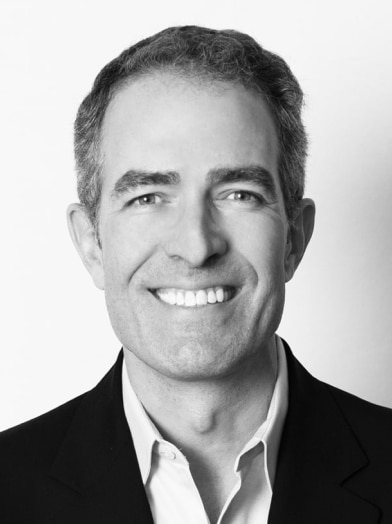
Peter High is the host of the Technovation podcast, the president of Metis Strategy, a columnist and commentator for Forbes, and the author of Getting to Nimble.

Nitin Tandon is Vanguard’s global chief information officer, leading our technology strategy and operations and helping shape our modernization and AI agenda.
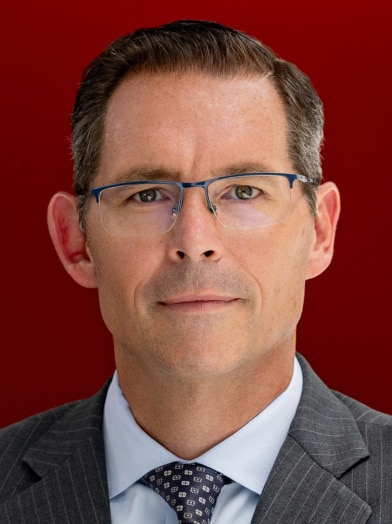
Joe Davis is Vanguard’s global chief economist, bringing a long-term view of the economy and markets, as well as the perspective of his 2025 book Coming Into View.

Joanna Rotenberg is Vanguard’s managing director of Personal Wealth, overseeing businesses that serve millions of investors through brokerage, cash management, and advisory services.

Notes:
All investing is subject to risk, including possible loss of principal.
Advisory services are provided by Vanguard Advisers, Inc. (VAI), a registered investment advisor.
Vanguard is owned by its funds, which are owned by Vanguard's fund shareholders.