Ownership
Why our ownership structure matters
Vanguard is owned by its member funds, which in turn are owned by fund shareholders. Because the investors in our funds are our owners, we can act independently and focus on meeting their long-term investment needs.
A long history of reducing the cost of investing
Our investor-owned structure enables us to offer high-quality mutual funds and ETFs that are among the lowest-cost in the industry. In fact, we have reduced our funds’ fees more than 2,000 times since our founding in 1975. Because we don’t have public shareholders, we can focus on our clients’ long-term success rather than quarterly results.
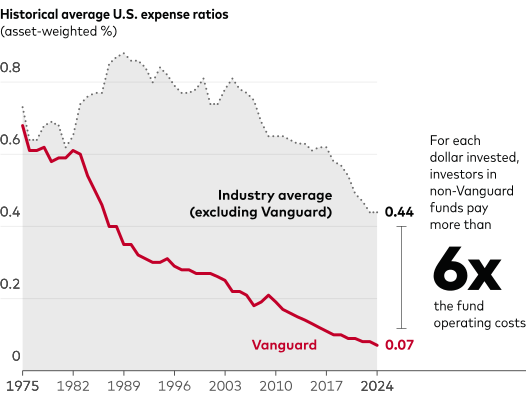
Note: Data reflect asset-weighted average U.S. combined mutual fund and ETF expenses, as a share of 2025 average net U.S. assets, as of December 31, 2025.
Sources: Vanguard and Morningstar, Inc.
Our investors are our owners; most other mutual fund management companies are owned by third parties—either public or private stockholders—who expect to profit from their ownership. Our structure benefits our fund shareholders, as we can pass along the profits we generate by reducing costs for the investors in our funds.
Lower costs mean that investors capture greater portions of their investments' gross returns. And when investors keep more of their earnings, they improve their investment outcomes.
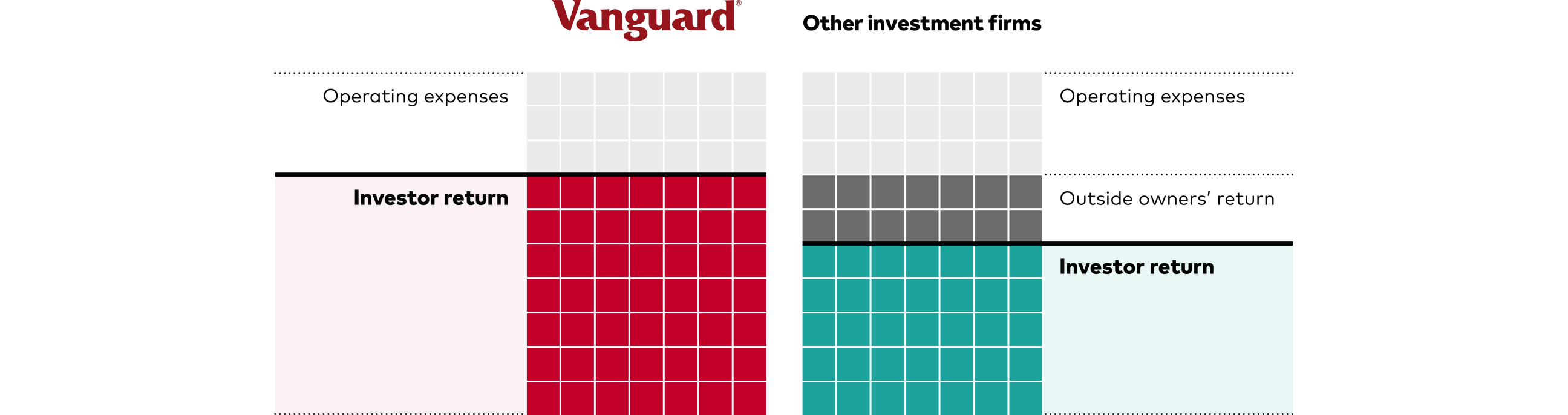
Note: This hypothetical information is for illustrative purposes only. Vanguard does not operate at cost. All other factors being equal, Vanguard’s ownership structure may allow investors to keep more of their investment returns. The proportions shown do not represent the distribution of returns on any particular investment.
Source: Vanguard.
In fact, Vanguard has led the low-cost revolution in the investment management industry. Our structure and scale have enabled us to stay committed to reducing the expense ratios on our U.S. funds. A respected industry observer dubbed this “The Vanguard Effect,” and it has taken hold across the globe. The Vanguard Effect reflects the tendency of asset managers to reduce their fees after Vanguard has entered a market or introduced products in a certain category. Competitors follow suit, which results in lower costs for all investors.
For more information about Vanguard funds and Vanguard ETFs, visit vanguard.com to obtain a prospectus or, if available, a summary prospectus. Investment objectives, risks, charges, expenses, and other important information are contained in the prospectus; read and consider it carefully before investing.
Vanguard ETF Shares are not redeemable with the issuing Fund other than in very large aggregations worth millions of dollars. Instead, investors must buy and sell Vanguard ETF Shares in the secondary market and hold those shares in a brokerage account. In doing so, the investor may incur brokerage commissions and may pay more than net asset value when buying and receive less than net asset value when selling.
All investing is subject to risk, including the possible loss of the money you invest.
Vanguard is owned by its funds, which are owned by Vanguard's fund shareholder clients.