Research findings
Four myths about women investors
August 26, 2026
Women are not waiting on the sidelines of wealth creation. They are leading household financial decisions and choosing advisors.
Vanguard’s Women & Wealth Study reveals that as women accumulate more wealth, it will increase their demand for quality financial advice. Financial advisors must set themselves up to most effectively support women and gain their trust, which begins with addressing assumptions that have long shaped how the financial industry supports women. Vanguard’s study shows many of these prior assumptions are simply myths.
Myth 1: Women lack financial confidence
Women are not far behind men when it comes to confidence, as 76% of women report feeling confident making financial decisions, compared to 83% of men. Advice can amplify this confidence, providing a lift across every major decision category, from retirement planning to portfolio strategy and estate planning.
Confidence in ability to make financial decisions in each area
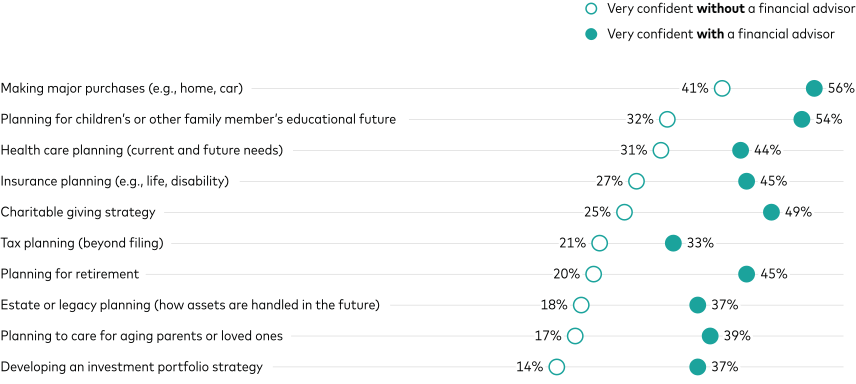
Notes: This chart shows the percentage of respondents in response to the question, “How confident do you feel about your ability to make financial decisions in each of the following areas?” The total survey participants included 1,002 women and 600 men.
Source: Vanguard Women & Wealth Study, 2026.
Advice can also enhance overall financial knowledge, as women who work with a financial advisor are nearly three times more likely to describe themselves as having advanced financial knowledge.
Myth 2: Women delay decisions out of fear
Deliberation does not necessarily mean fear. Seventy-five percent of women report having a tendency to take a long time to think through financial decisions, and most (68%) want to see all their options before acting. This includes taking market or economic factors into account, which is the leading reason why women report delaying financial decisions.
In addition to considering market conditions, women weigh decisions against their larger financial plan. Women’s goals shift meaningfully as wealth accumulates, moving from protecting what they’ve built toward actively growing it. While their financial goals may change over time, women generally remain focused on making sound decisions.
What women investors are hoping to achieve with investments by asset level
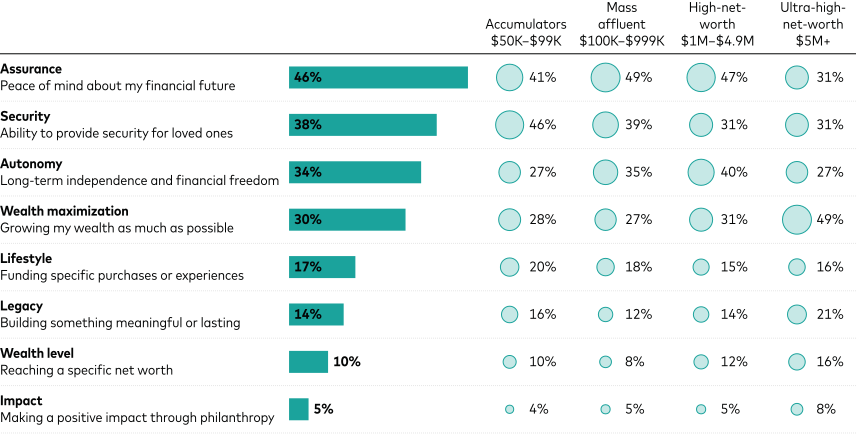
Notes: This chart shows the percentage of respondents in response to the question, “What are you most hoping to achieve with your investments?” Respondents could select up to two options. The total survey participants included 1,002 women.
Source: Vanguard Women & Wealth Study, 2026.
“A financial plan should evolve just as your life does,” explains Massy Williams, Vanguard’s head of Wealth Management. “As women accumulate wealth, they often gain the flexibility to plan beyond immediate financial needs and focus on broader aspirations for themselves, their families, and their future. Consistently reevaluating goals and discussing them with a trusted financial professional can help ensure a plan keeps pace with life’s changes.”
After making decisions, women tend to stick to them as well. Almost all (97%) women say that when they agree on next steps with their advisor, they consistently follow through.
Myth 3: Women want empathy above expertise
Ask an advisor what women want from their support, and empathy is likely to be a common answer. Yet women rank educational and collaborative as their top two preferred communication styles from a financial professional. Only 14% of women rank empathetic as one of their top two style preferences, compared to 17% of men.
Communication styles preferred from a financial professional
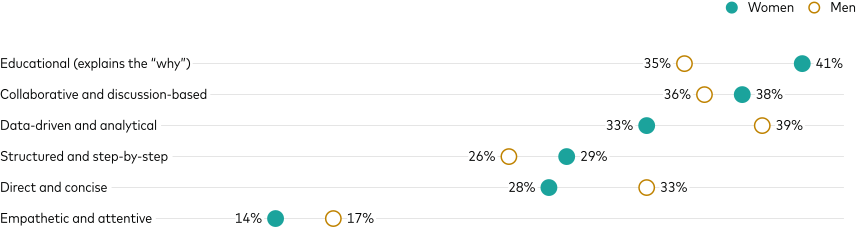
Notes: This chart shows the percentage of respondents in response to the question, “What communication style(s) do you most prefer a financial professional to use?” Respondents could select up to two options. The total survey participants included 1,002 women and 600 men.
Source: Vanguard Women & Wealth Study, 2026.
The top traits women value in their advisors are trustworthiness and financial expertise. While women prefer to carefully deliberate when making decisions, an advisor who provides clear recommendations during the decision-making process will appeal to more women (36%) than an advisor who simply offers emotional reassurance (15%).
Women investors also tend to cite practical barriers—like value, cost, and selection—as the top reasons for opting not to work with an advisor.
Reasons investors don’t work with a financial advisor
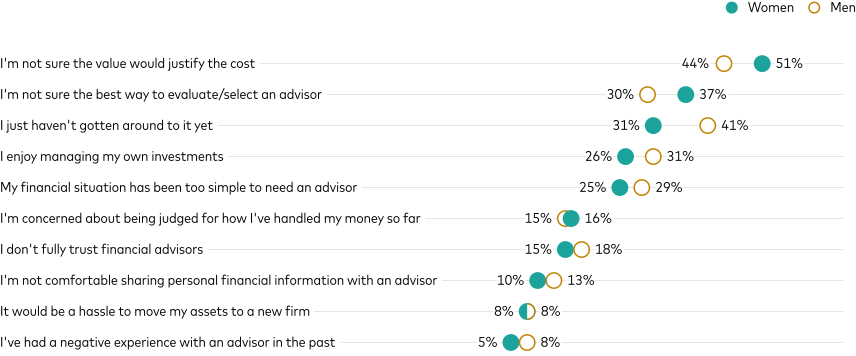
Notes: This chart, with responses drawn from a base group of 202 women and 111 men without a financial advisor, shows the percentage of respondents in response to the question, “What are the main reasons you don’t currently work with a financial advisor?” Respondents could select up to three options.
Source: Vanguard Women & Wealth Study, 2026.
Myth 4: High confidence means less advisor need
The most confident women investors want the most support—and they want to be active participants, not passive recipients, with 64% of very confident women reporting that they enjoy working on planning for their financial future. Confidence also drives loyalty, as the most financially confident women are the most likely to recommend their advisor to others.
“Women investors represent one of the biggest growth opportunities for advisors today, and our findings should serve as a call to action,” says Janel Jackson, head of bank and institutional in Vanguard Financial Advisor Services. “Advisors who can both deliver investment expertise and establish trust with women will be better positioned to build lasting relationships that drive long-term practice growth.”
But a relationship is a two-way street. Women who report being the most financially confident are also the most likely to leave an advisor relationship, and women across all confidence levels cite a variety of reasons for why they stopped working with an advisor.
Primary reasons women stopped working with advisor
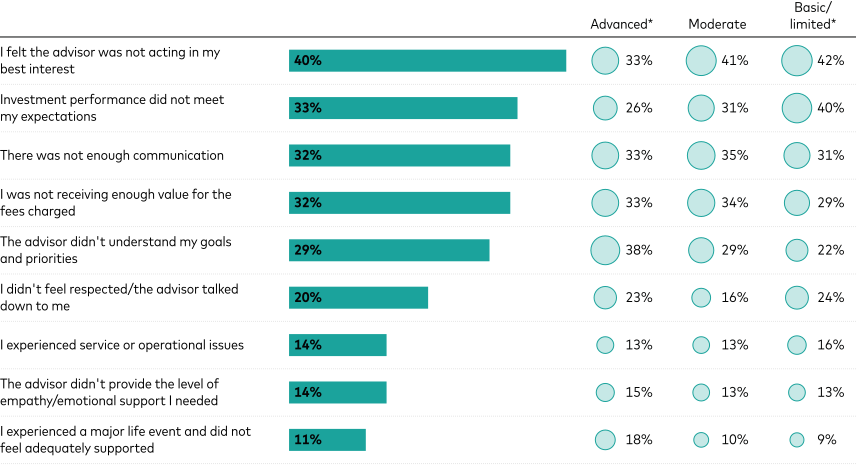
Notes: This chart, with responses drawn from a base group of 198 women who had ended a relationship with a financial advisor, shows the percentage of respondents in response to the question, “What are the primary reasons you decided to stop working with that financial advisor?” Respondents were broken down by financial knowledge level and could select all the reasons that applied. The asterisks indicate a small sample size, including 39 for the advanced category and 55 for the basic/limited category.
Source: Vanguard Women & Wealth Study, 2026.
The real opportunity
Many of the assumptions that have historically shaped advice for women investors no longer reflect reality. Women are confident, engaged decision-makers who value expertise, trust, and collaboration, and they are willing to leave advisors who fail to meet those expectations. Advisors who think beyond common myths and question other readily accepted assumptions will be best positioned to build relationships grounded in trust and serve this growing and influential investor segment.
About the Women and Wealth study
In 2026, Vanguard Group, Inc., partnered with the independent research firm 8 Acre Perspective to conduct a survey of 1,602 U.S. investors across asset tiers and life stages. The study aimed to understand what drove trust and loyalty among women investors and how relationships with financial providers strengthened or broke down over time. It explored how major life events shaped financial decision-making and shifted priorities, creating opportunities for more proactive engagement. The research also examined the confidence–competence gap, its influence on investor-provider relationships, and potential strategies to help close it, while assessing how significant wealth transfer events impacted overall financial situations and the risk of switching advisors.